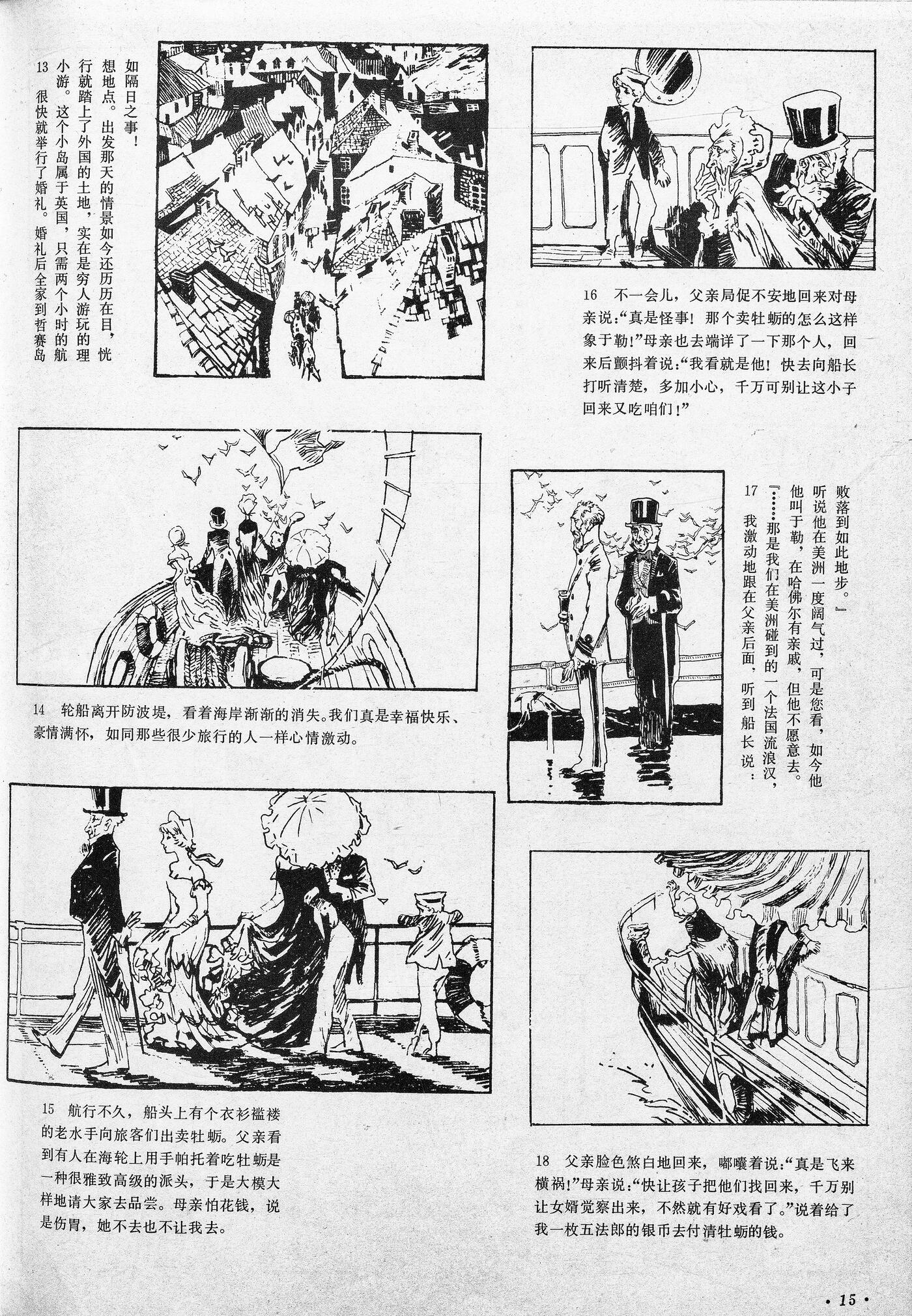
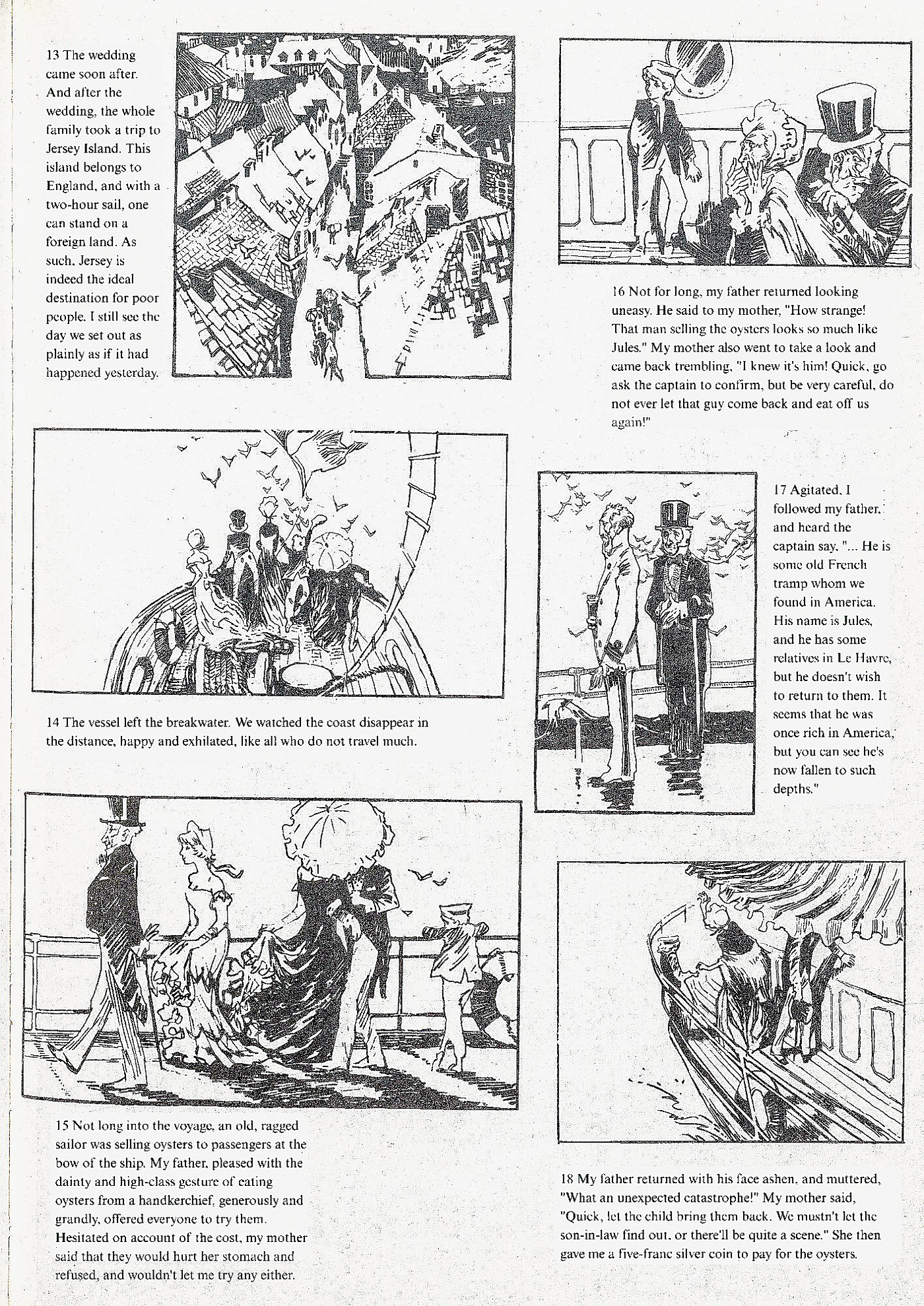
13 The wedding came soon after. And after the wedding, the whole family took a trip to Jersey Island. This island belongs to England, and with a two-hour sail, one can stand on a foreign land. As such, Jersey is indeed the ideal destination for poor people. I still see the day we set out as plainly as if it had happened yesterday.
15 Not long into the voyage, an old, ragged sailor was selling oysters to passengers at the bow of the ship. My father, pleased with the dainty and high-class gesture of eating oysters from a handkerchief, generously and grandly, offered everyone to try them. Hesitated on account of the cost, my mother said that they would hurt her stomach and refused, and wouldn’t let me try any either.
16 Not for long, my father returned looking uneasy. He said to my mother, “How strange! That man selling the oysters looks so much like Jules.” My mother also went to take a look and came back trembling, “I knew it’s him! Quick, go ask the captain to confirm, but be very careful, do not ever let that guy come back and eat off us again!''
17 Agitated, I followed my father, and heard the captain say, “… He is some old French tramp whom we found in America. His name is Jules, and he has some relatives in Le Havre, but he doesn’t wish to return to them. It seems that he was once rich in America, but you can see he’s now fallen to such depths.”
18 My father returned with his face ashen, and muttered, “What an unexpected catastrophe!” My mother said, “Quick, let the child bring them back. We mustn’t let the son-in-law find out, or there’ll be quite a scene.” She then gave me a five-franc silver coin to pay for the oysters.