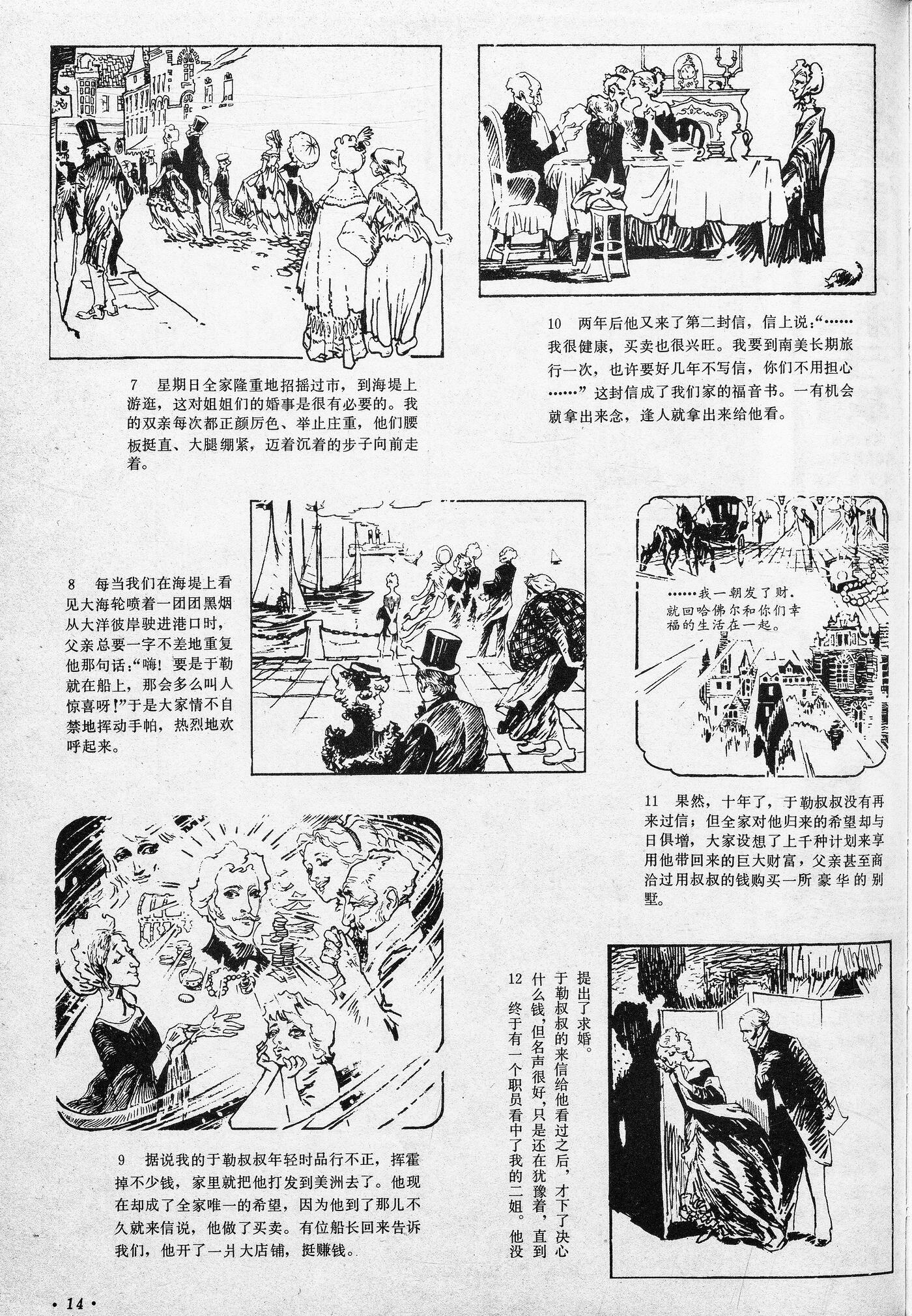
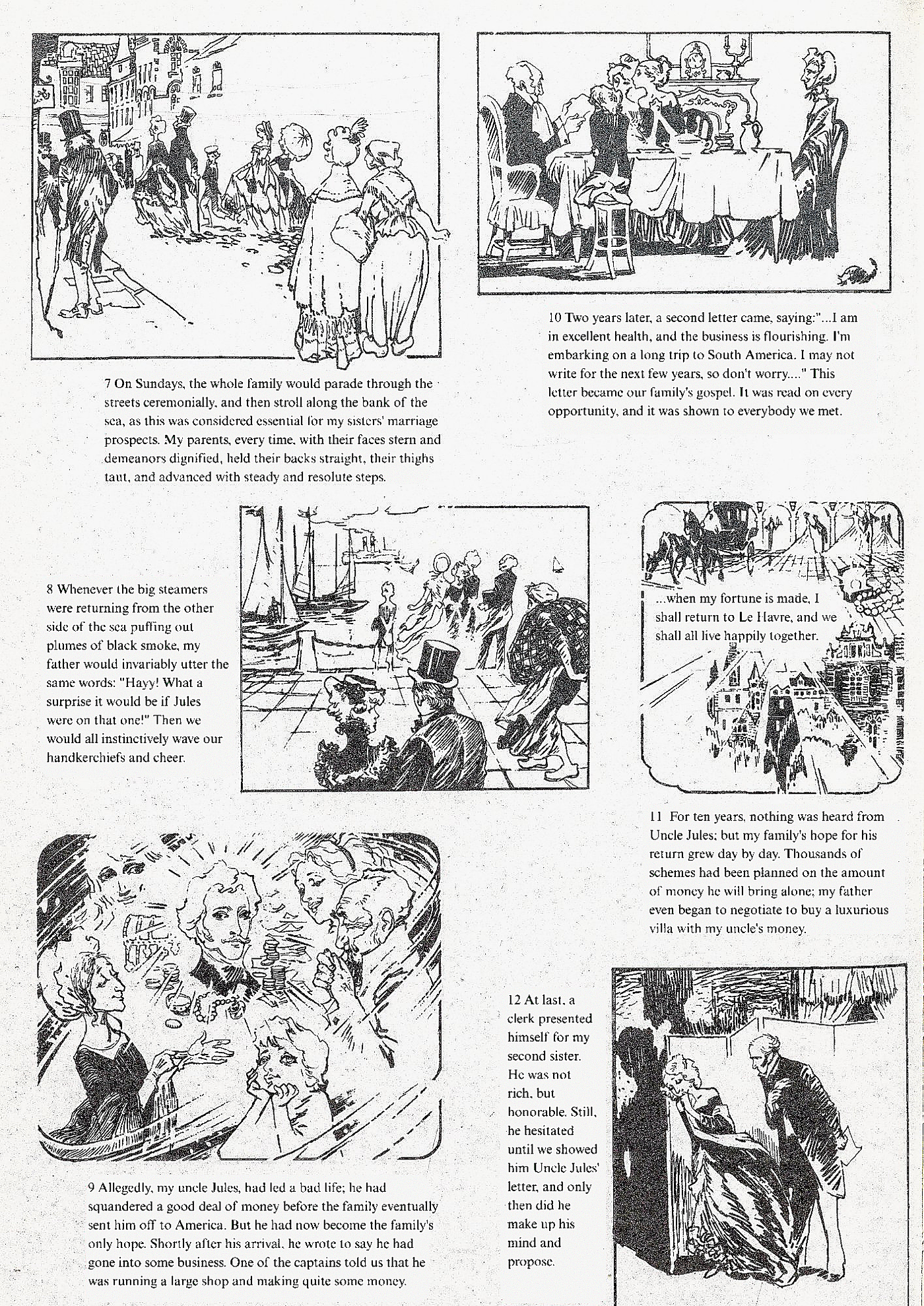
7 On Sundays, the whole family would parade through the streets ceremonially, and then stroll along the bank of the sea, as this was considered essential for my sisters’ marriage prospects. My parents, every time, with their faces stern and demeanors dignified, held their backs straight, their thighs taut, and advanced with steady and resolute steps.
8 Whenever the big steamers were returning from the other side of the sea puffing out plumes of black smoke, my father would invariably utter the same words: “Hayy! What a surprise it would be if Jules were on that one!” Then we would all instinctively wave our handkerchiefs and cheer.
9 Allegedly, my uncle Jules, had led a bad life; he had squandered a good deal of money before the family eventually sent him off to America. But he had now become the family’s only hope. Shortly after his arrival, he wrote to say he had gone into some business. One of the captains told us that he was running a large shop and making quite some money.
10 Two years later, a second letter came, saying:”…I am in excellent health, and the business is flourishing. I’m embarking on a long trip to South America. I may not write for the next few years, so don’t worry….” This letter became our family’s gospel. It was read on every opportunity, and it was shown to everybody we met.
11 “…when my fortune is made, I shall return to Le Havre, and we shall all live happily together.” For ten years, nothing was heard from Uncle Jules; but my family’s hope for his return grew day by day. Thousands of schemes had been planned on the amount of money he will bring alone; my father even began to negotiate to buy a luxurious villa with my uncle’s money.
12 At last, a clerk presented himself for my second sister. He was not rich, but honorable. Still, he hesitated until we showed him Uncle Jules’ letter, and only then did he make up his mind and propose.